
The Role of Training Corrections in Helping Fearful Dogs
Owning a fearful dog can be heartbreaking. You want to help your furry friend – who may tremble during thunderstorms or hide from visitors – but you don’t know how One concept often discussed in balanced dog training is the use of training corrections and other behavior modification techniques to help reduce unwanted behaviors. Understanding how these methods fit within a broader training plan can help owners make informed decisions when working with fearful dogs. This guide explains what that means for pet owners in Frisco and Allen, TX, compares it to other methods, and demonstrates how it helps a dog overcome fear.
Understanding Training Corrections in Dog Training
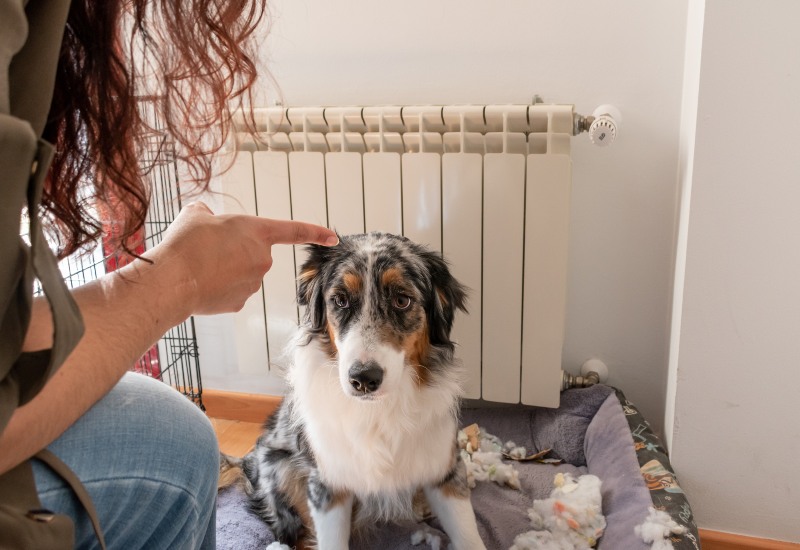
To understand basic dog training, it’s helpful to learn how dogs acquire and modify behaviors. Trainers use a variety of techniques to encourage desired behaviors and discourage unwanted ones. One behavior modification principle often discussed in training is known as “positive punishment,” a scientific term describing the addition of a consequence intended to reduce a behavior. This ethical dog training method involves:
- Verbal Corrections – Saying “No” or “Ah-ah!” sharply when a dog jumps up
- Leash Corrections – Giving a quick tug on the leash when a dog pulls
- E-Collars – Using an electronic collar to deliver a sensation when the dog does something unwanted
- Physical Pressure – Using body language or touch to move a dog out of a space
The goal is to teach the dog that a specific action leads to an unpleasant result. If the dog stops doing the action to avoid the result, positive punishment has occurred.
Understanding Fearful Dogs and Their Behavior
Before we can decide on a training method, we have to understand the dog. A fearful dog is not usually trying to be bad or dominant. They’re acting on emotion. Fear in dogs can come from many places:
- Genetics – Some breeds or lines of dogs are naturally more nervous.
- Lack of Socialization – If a puppy doesn’t meet enough people or see enough things, they might fear them later.
- Trauma – A bad experience – like a dog attack – can cause lasting fear.
When a dog is scared, they usually react in one of four ways: fight, flight, freeze, or fawn. A dog that is growling at a stranger might be in fight mode because they’re terrified. A dog that refuses to walk might be in freeze mode. Understanding that these are emotional panic responses is crucial when choosing a dog training punishment method.
Behavior Modification Techniques: Where Training Corrections Fit
There are four quadrants of operant conditioning. Positive punishment is just one of them.
- Positive Reinforcement – Adding something good – like a treat – to increase behavior
- Negative Reinforcement – Removing something bad – like leash pressure – to increase behavior
- Positive Punishment – Adding something bad – like a verbal correction – to decrease behavior
- Negative Punishment – Removing something good – like attention – to decrease behavior
In the world of balanced dog training techniques, trainers might use a mix of these. However, when dealing with fear, the selection of the method matters more than ever.

Positive Reinforcement vs. Training Corrections
With positive reinforcement, you change the dog’s emotions. For example, if a dog is scared of a man in a hat, you can give the dog chicken every time they see a man in a hat. Over time, the dog thinks, “Men in hats mean chicken!” The fear goes away because the emotion changes.
With positive punishment, you suppress the behavior. If the dog growls at the man in a hat, you might give a leash correction. The dog may stop growling because they want to avoid the correction. However, the dog might still be scared of the man. They have just learned that expressing their fear leads to an unpleasant outcome.
Can Training Corrections Help Fearful Dogs?
This is a complex question. Many behavioral scientists caution against relying on training corrections to address fear-based behaviors.However, some experienced trainers argue that there are specific times it can be useful if done carefully.
The argument for using it usually involves interrupting a fixation. If a dog is so focused on another dog that they’re working themselves into a frenzy, a low-level stimulation from an electronic collar might snap them out of it. Once the dog is listening again, the trainer can guide them to better behavior.
In this specific view, the punishment isn’t for being scared. It’s for the dangerous reaction, like lunging into traffic. However, this requires high-level timing and skill. If done wrong, it can make things worse.
Considerations When Using Training Corrections with Fearful Dogs
For the average dog owner, using positive punishment on a fearful dog carries significant risks. Because fear is an emotion, you cannot simply “correct” it out of a dog. Here are the dangers:
- Increased Aggression – If a dog is growling to say, “I’m scared, stay away,” and you correct them, they might stop growling. But next time, they might bite without warning because their warning system was punished.
- Negative Association – If a dog is scared of children, and every time they see a child, they get a leash correction, they might start thinking children cause pain. This makes the fear – and potential aggression – much worse.
- Shutting Down – A dog might become so afraid of making a mistake that they just lie down and shake. This looks like good behavior to some, but it’s actually a state of extreme stress called learned helplessness.
- Loss of Trust – If the owner becomes associated with corrections during already stressful situations, the bond between dog and owner may suffer.
Ethical Dog Training Methods for Fearful Dogs
One of the best ethical dog training methods is Desensitization and Counter-Conditioning (DSCC):
- Desensitization – This involves exposing the dog to the scary thing at a very low intensity. For example, you may play thunder sounds quietly while the dog relaxes.
- Counter-Conditioning – You can also change the emotional response. When you hear thunder, you can give the dog cheese to reframe what happens during storms.
This approach takes longer than punishment and requires patience. However, it addresses the root cause of the problem rather than just the symptoms.

What Professional Trainers and Behaviorists Recommend
Most certified veterinary behaviorists and animal organizations recommend avoiding positive punishment for fearful dogs. They suggest focusing on management and positive reinforcement to build confidence.
However, some balanced trainers believe that clear boundaries help fearful dogs feel safe. They might use tools like prongs or electronic collars to communicate, but they generally agree that you should never punish the fear itself.
Look for a trainer who’s transparent about their methods. Hilton Butler can help if you’re in the Frisco & Allen, TX area.
FAQ About Training Corrections and Fearful Dogs
Is Positive Punishment the Same as Abuse?
No. Abuse is malicious. Positive punishment is a defined learning theory used to discourage behavior. However, if used incorrectly or with excessive force, it can harm the dog’s mental state.
Can I Use a Bark Collar on a Dog with Separation Anxiety?
This is generally not recommended. Separation anxiety is a panic disorder. Using a bark collar punishes the dog for having a panic attack, which often increases the anxiety and can lead to self-injury.
What If Positive Reinforcement Isn’t Working?
If treats aren’t working, you might be too close to the scary object, or the treats might not be high value enough. It’s also possible you need the help of a professional to adjust your timing.
Choosing the Right Approach for Fearful Dogs
While training corrections are one component of behavior modification, applying them to fearful dogs requires careful consideration. The ultimate goal should be to build confidence, improve communication, and help the dog navigate the world more comfortably. Effective training focuses on understanding the dog’s emotional state while creating clear and consistent expectations. You want your dog to look at the world with confidence, not with fear of correction. Hilton Butler can help you apply balanced dog training techniques safely and fairly. Contact us in the Frisco & Allen, TX area today to schedule a consultation for our bootcamp training program.