
Behavior Modification vs. Formal Obedience: Understanding Their Roles in Training
It’s not uncommon for dog owners to become frustrated with their pet’s inconsistent behavior. Their dog may sit politely in the living room but pull on the leash or bark at strangers as soon as they step outside. The problem often isn’t that the dog is bad or stubborn. It may be that the training method doesn’t match the problem. The two primary types of training are formal obedience training and behavior modification. While they might look similar, they have different goals. Hilton Butler can help you understand the difference between behavior modification vs. formal obedience. We’re proud to explain each to our clients in Frisco and Allen, TX.
What Is Obedience Training for Dogs?
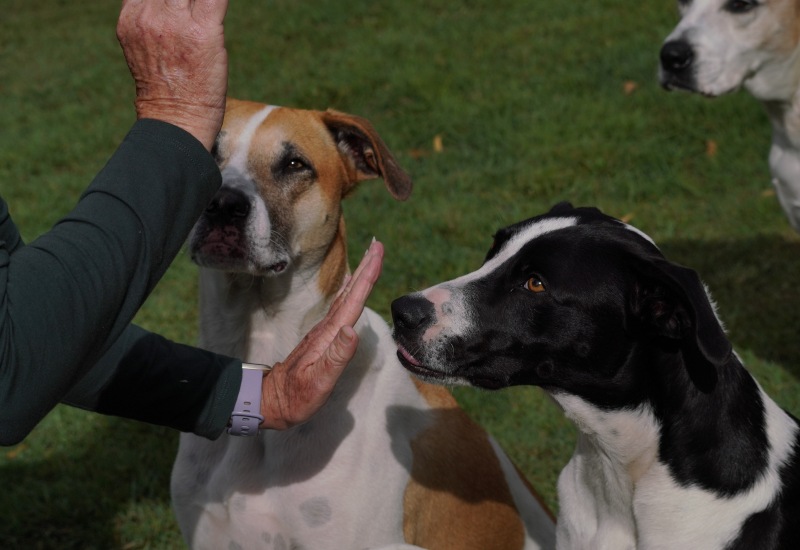
Think of obedience training as school for your dog. It’s the process of teaching your dog to perform specific actions when you give a cue. These cues can be verbal commands, hand signals, or whistle sounds, with the goal of eliciting a reliable response from your dog. Obedience training for dogs typically covers the basics, such as “Sit,” “Down,” “Stay,” “Come,” and “Heel.”
Once a pet masters the basics, it can move on to advanced obedience training for dogs. This level requires the dog to follow commands in distracting environments or from farther away. Obedience is fantastic for managing your dog and keeping it safe.
What Is Behavior Modification in Dog Training?
While obedience is about what your dog does, behavior modification is about how your dog feels. It focuses on changing a dog’s emotional response to a situation, person, or object.
Behavior modification is necessary when a dog is reacting out of fear, anxiety, or aggression. If a dog is scared of thunder, teaching it to sit won’t make it less fearful. Dog behavior modification techniques work to change the underlying cause of the behavior. Common issues we can address through behavior modification include:
- Separation anxiety
- Resource guarding
- Fear of strangers or other dogs
- Leash reactivity
The goal here is to change the dog’s state of mind so that it doesn’t feel the need to react in the future.
Obedience Training vs. Behavior Modification: Key Differences
It can be tricky to tell these two apart because they often overlap. However, there are some clear distinctions:
- Focus – Obedience focuses on physical actions, while behavioral modification focuses on emotional states.
- Method – Obedience uses repetition and rewards to teach a new skill. Behavior modification uses desensitization and counter-conditioning.
- Outcome – The result of obedience is a dog that listens to commands. The result of behavior modification is a calm, balanced dog.
When Obedience Training Works Best
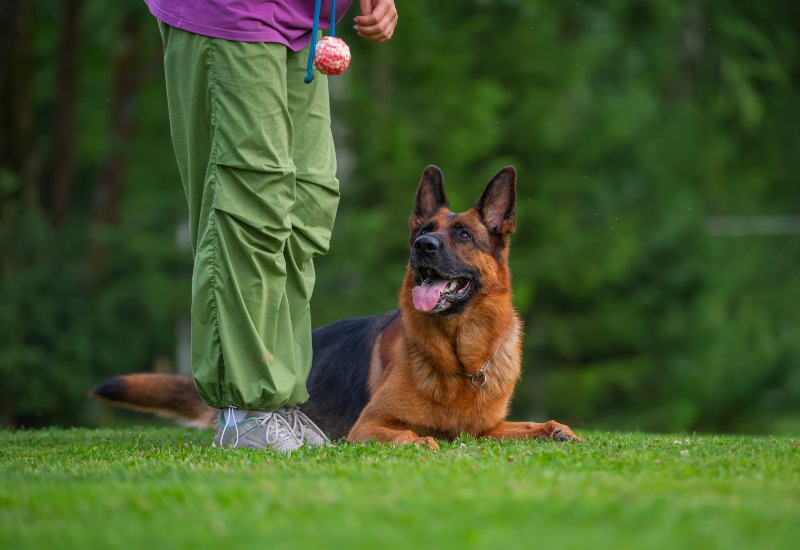
Obedience training is the foundation for a well-mannered pet. It’s the best choice when your dog is generally happy and confident but doesn’t yet know the rules. You should choose formal obedience if:
- You Have a New Puppy – Puppies are blank slates. They need to learn how to live in a human world.
- Your Dog Is Unruly – If your dog jumps on guests because it’s excited, it should learn a “place” or “down” command.
- You Want to Do Dog Sports – Agility, rally, and competition obedience all require a high level of advanced obedience training for dogs.
- Safety is a Concern – Every dog needs a reliable recall to keep them safe off-leash.
When Behavior Modification is Necessary
If your dog is suffering, obedience commands might not be enough. You cannot command a dog not to have a panic attack. In these cases, you must address the root of the problem. Behavior modification is necessary if:
- Your Dog Shows Aggression – Dog aggression behavior modification is specialized and crucial for safety.
- Your Dog Is Fearful – If your dog hides, shakes, or urinates when scared, it needs help building confidence.
- Your Dog Is Reactive – If your dog explodes at the sight of other dogs on a leash, it’s often the result of frustration or fear rather than disobedience.
- Your Dog Has Obsessive Behaviors – Chasing shadows, spinning, or licking excessively can be signs of deeper issues.
Why Obedience Training Alone Can Fail for Behavior Problems
Many owners try to fix behavioral issues with obedience commands. For example, if a dog growls at a stranger, the owner might shout “No!” or “Sit!” While the dog might sit, it’s likely still growling or staring intently. The internal emotion hasn’t changed. If you only use correction during these moments, the dog might associate the stranger with the correction. This can make the fear or aggression worse over time. For true rehabilitation, you must change the dog’s perception of the trigger.
How Obedience and Behavior Modification Work Best Together
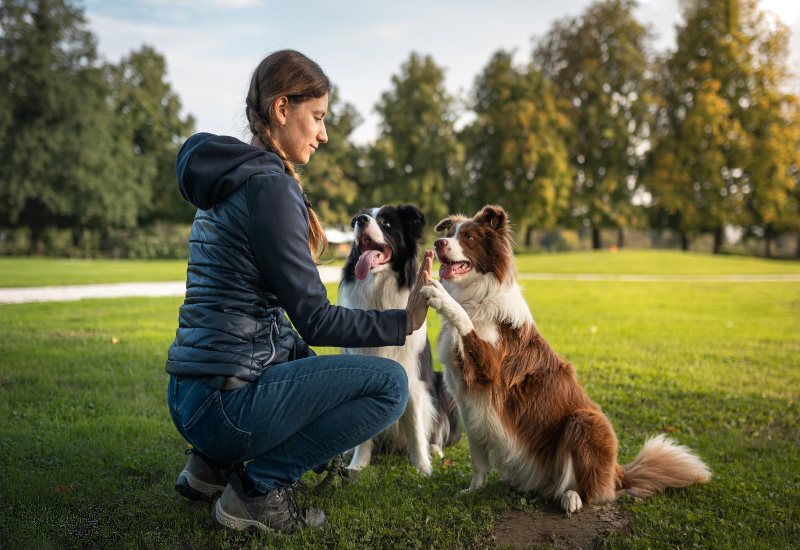
The best programs often use a mix of obedience training and behavior modification. Structure helps anxious dogs feel safe. When dogs know what to expect, they’re often calmer. For example, let’s say a dog is reactive to other dogs on walks:
- Behavior Modification – You work on keeping the dog at a distance where they notice the other dog but don’t react. You reward them for looking at the dog, then back at you. This changes the emotional response from “Enemy” to “Opportunity for a Treat.”
- Obedience – You teach a strong “Heel” command. This gives the dog a job to do while passing the other dog. It provides physical structure to support the new emotional state.
In some cases, you can use tools like an e-collar to provide communication and guidance at a distance, but this should always be done fairly and with a clear understanding of the dog’s state of mind.
Choosing the Right Training Approach for Your Dog
Examine your dog’s behavior honestly. Is it breaking the rules because it doesn’t know them or is it acting out because it’s upset? If it’s a lack of skill, opt for obedience classes. If it’s an emotional issue, consider behavior modification.
Don’t be afraid to ask for help. Misdiagnosing the problem can lead to wasted effort. A professional trainer can evaluate your dog and recommend the program that will help it thrive.
FAQ About Behavior Modification for Dogs
Can Old Dogs Benefit from Behavior Modification?
Yes. Dogs can learn and change at any age. While it might take a bit longer to break old habits in a senior dog, it’s absolutely possible to improve its quality of life.
Is an E-Collar Used in Behavior Modification?
An e-collar can be a valuable tool for communication, especially for off-leash freedom or breaking fixation. It can be used as a form of correction for disobedience or to grab attention, but only after the dog understands what’s expected.
How Long Does Behavior Modification Take?
There’s no set timeline. It depends on the severity of the issue and the owner’s consistency. Some dogs show improvement in weeks, while modifying aggression can take months of work.
Can I Do This Myself?
Dedicated owners can usually handle minor issues. However, for aggression or severe anxiety, it’s safer and more effective to hire a professional behaviorist.
Hilton Butler Can Help You Choose Between Training for Skills or a Change in DFW
If you’re in Frisco or Allen, TX, Hilton Butler can help you choose between obedience training and behavior modification for your dog. Our team specializes in assessing the root cause of pet behaviors. Contact us today to schedule an evaluation.