What’s in Your Dog Training Toolbox?
Training is an ongoing practice, not a one-time event, which means you should continually add dog training tools to your toolbox for long-term success. Just as important, every member of the household should participate in training so that commands, expectations, and routines remain the same. Consistency is one of the primary factors that support successful training outcomes. Here are some important tools to keep you on the right track.
Rewards: The Most Important Tool in Dog Training
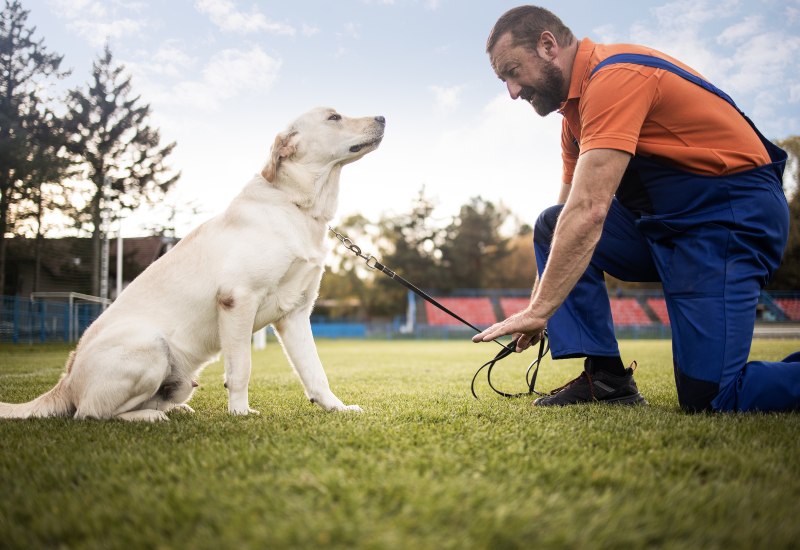
Rewards are the foundation of effective positive reinforcement dog training, and dogs are motivated by different things. Food is often effective during training sessions, but many dogs also respond well to praise, play, or a favorite toy. Knowing what your dog values most and using it consistently to reinforce correct behavior will help you communicate which behaviors are desirable for your dog. Rewards could include:
- Food treats
- Verbal praise
- Physical affection when appropriate
- Toys
- Play sessions
- Access to preferred activities
Essential Dog Training Tools for Everyday Success
Training tools help owners teach and reinforce basic skills. However, the effectiveness of any tool depends on proper use and consistent training. Basic dog training will start with fundamental commands, such as:
- Sit
- Stay
- Come
- Leave it
- Down
- Heel
Additionally, your toolbox should include some basic training equipment to help with commands and keep your dog safe. Useful supplies include:
- High-value training treats
- A steady, non-retractable leash
- A properly fitted head harness
- A clicker for marker training
- A secure collar or identification system
The Right Training Environment Matters
Professional dog training tools aren’t limited to supplies at the pet store. Training should occur in the environments where dogs actually live and interact. Real-world training environments help dogs learn how to respond despite distractions and changing situations. Hilton Butler offers in-home training programs because they allow trainers to address behaviors where they occur. Training in realistic settings can improve:
- Reliable and consistent behavior
- Focus around distractions
- Household behavior management
Specialized Training Cues That Solve Real-Life Problems
Basic obedience provides structure, but many owners also need solutions for common behavioral challenges. An effective approach focuses on redirecting behavior before the unwanted action begins. Specialized training cues can help address problems such as:
- Pulling on leash walks
- Jumping on visitors
- Excessive barking
- Destructive chewing
- Counter surfing
- House-training accidents
Service Dog Training Tools and Advanced Skill Development
Service dogs provide valuable assistance to individuals with a wide range of needs. Dogs require a particular temperament and working ability to remain calm, controlled, and responsive in different environments. A professional dog trainer should evaluate a dog to determine its confidence, ability to focus, trainability, and response to distractions. If the dog is a suitable candidate, service dog training tools will include:
- Core obedience training
- Task-specific training based on the handler’s needs
- Public access training
- Advanced behavior reliability
Common Mistakes When Building a Dog Training Toolbox
The most common setback in training is usually from inconsistent application, not a lack of equipment. Short, focused training sessions are more productive than lengthy sessions that can lead to frustration or reduced attention. Clear communication and consistency produce more reliable results than correction-based approaches. Common mistakes include:
- Using different commands for the same behavior
- Inconsistent household rules
- Training sessions that are too long
- Expecting immediate results
- Yelling at the dog
- Using force-based methods
- Failing to reward desired behaviors
Continue Building Your Toolbox as Your Dog Grows
As your dog grows, so should your training toolbox. Puppies, adolescent dogs, adult dogs, and senior dogs require different training approaches and reinforcement strategies. As new situations arise, you discover you need additional commands and management techniques in your training program. With consistent practice and proper methodology, training remains an ongoing partnership that grows stronger over time.
Learn More About Dog Training Classes at Hilton Butler
Whether you’re introducing a new puppy to basic commands or working through specific behavioral challenges, the right approach can help establish clear expectations and reliable communication. Hilton Butler provides dog obedience training throughout the Dallas-Fort Worth, TX area, including programs designed to address real-world behavior challenges in practical settings. Contact us to learn more about available dog training classes and personalized training solutions.
Frequently Asked Questions
What Is the Best Reward for Dog Training?
The best one is what your dog finds most motivating. For many dogs, food treats work well, but praise, toys, and play can also be highly effective reinforcement tools.
Should I Use Food Rewards or Toy Rewards During Training?
Both can be useful. Food rewards are effective when teaching new behaviors, while toy rewards may work better for dogs with a strong play drive. Many training programs use a combination of both.
Is Clicker Training Necessary for Obedience Training?
A clicker is a helpful marker tool that can improve timing and communication, but successful obedience training can also be achieved using verbal markers and consistent reinforcement.
Can Training Tools Replace Professional Dog Training?
Training tools support the learning process, but results depend on proper training methods, consistency, and handler skill. Professional guidance can help owners use tools correctly and address specific behavioral challenges.
Military service can have lasting effects that continue after service members return to civilian life. Some face physical disabilities that require…
Understanding Your Dog’s Training Needs Before Choosing a Program
Choosing a professional dog training program starts with understanding your…